

























































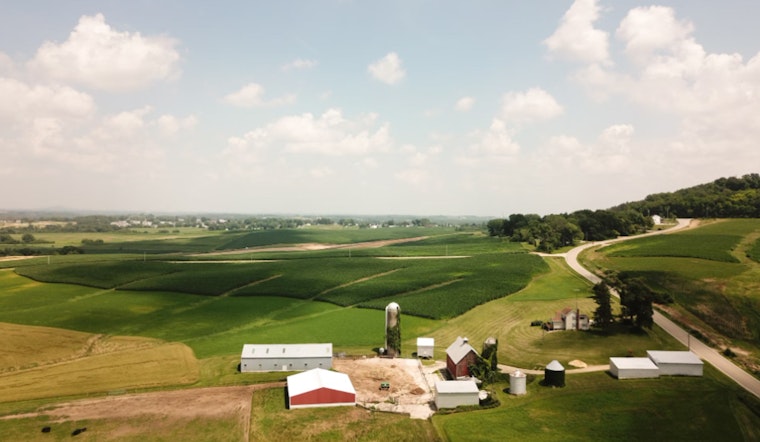
In an intriguing development at MIT, engineers have managed to imbue bacteria with the ability to emit signals detectable from a significant distance. Through cutting-edge manipulation, these microorganisms now essentially serve as sensors, potentially revolutionizing our approach to environmental monitoring. As reported by MIT News, the signals are imperceptible to the naked eye but can be picked up by specialized equipment, including hyperspectral cameras, from up to 90 meters away - a feat that holds great promise for agricultural and other wide-ranging applications.
The intuitive leap taken here by the research team was to adjust the cells to produce unique combinations of color at certain wavelengths, allowing for the emission of distinct spectral signatures. These can be picked up by hyperspectral cameras which are sophisticated enough to quickly and clearly identify the signals. "It's a new way of getting information out of the cell. If you're standing next to it, you can't see anything by eye, but from hundreds of meters away, using specific cameras, you can get the information when it turns on," Christopher Voigt, head of MIT's Department of Biological Engineering and senior author of the study, told MIT News.
The applications for this technology are vast, ranging from monitoring pollutants and soil nutrients to, potentially, detecting landmines. "The nice thing about this technology is that you can plug and play whichever sensor you want," said Yonatan Chemla, an MIT postdoc and one of the lead authors of the study, according to a statement obtained by MIT News. The flexibility of the system lies in its ability to integrate seamlessly with a plethora of existing sensors, suggesting a broad array of custom applications.
The work, which also included substantial contributions from MIT students Yueyang Fan, Anna Johnson, and collaboration from Associate Professor Connor Coley, doesn't only peer into the minute world of bacteria, but also casts its gaze outwards, to the broader horizons of agricultural lands and environmental landscapes. Such a prospect necessitates not just innovation, but an ongoing dialogue with regulatory bodies. To this end, Voigt and Chemla have been liaising closely with relevant agencies to navigate the regulatory and safety considerations as this technology marches steadily from concept to potential real-world implementation.
Funded by the U.S. Department of Defense and other agencies, the project remains at the intersection of environmental science and technological advancement. It encapsulates a keen interest in the intersection of science and the regulatory landscape, reflecting an awareness of the societal implications of biotechnological developments. For further details on the bacteria and their newfound capabilities, insights into the nature of the breakthrough, or the future trajectory of the research, visit the full report by MIT News.





